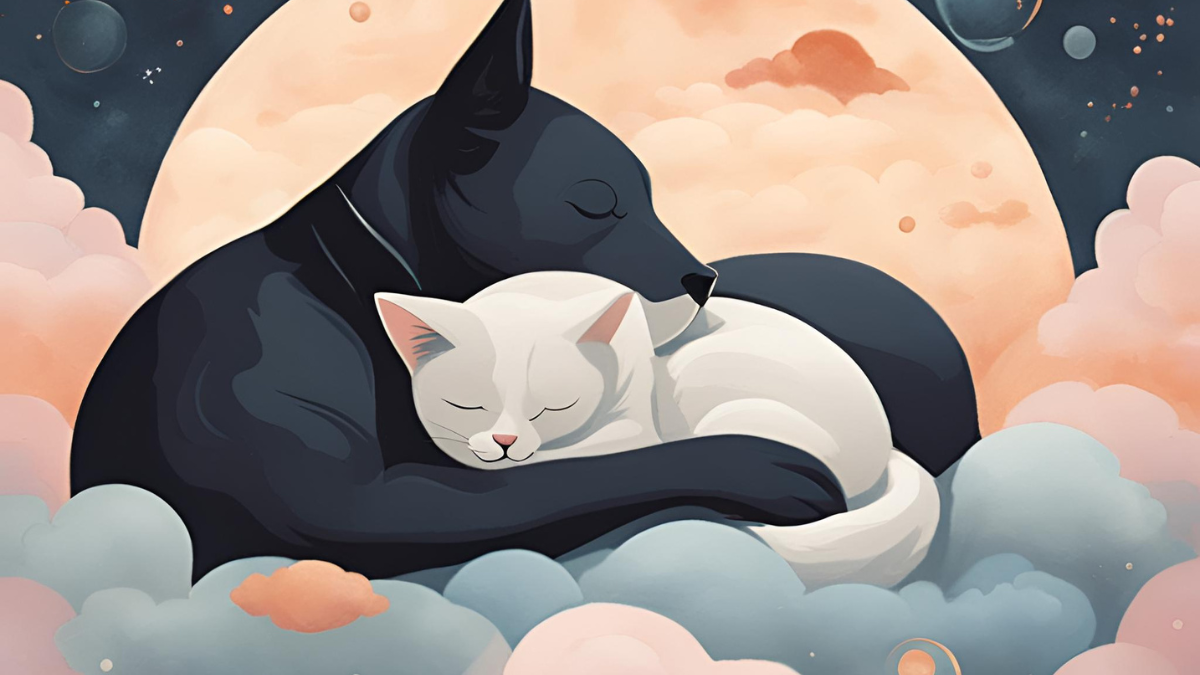
If you’ve ever seen your dog twitching in their sleep, or your cat softly meowing while curled up in a deep slumber, you may have wondered: Do animals dream? While humans often experience vivid dreams during sleep, the question of whether animals share similar experiences has intrigued scientists and pet owners alike.
Sleep studies on animals reveal that many creatures, including household pets like dogs and cats, undergo cycles of sleep that mirror those of humans, including the REM (Rapid Eye Movement) stage, where dreams are most likely to occur. This article delves into the fascinating world of animal dreams and what we know about the sleep patterns of pets.
The Science of Animal Sleep: REM and Non-REM Sleep
Like humans, animals go through various stages of sleep. These stages include Non-REM (non-rapid eye movement) sleep, which is a deeper, more restorative phase, and REM sleep, the lighter stage during which dreams occur. During REM sleep, the brain is highly active, and in humans, this is when we experience the most vivid dreams.
Research shows that dogs, cats, and other mammals experience REM sleep, leading scientists to believe that they likely dream during this stage. Pets typically enter REM sleep around 20 minutes into their rest, and just like humans, they may display behaviors like twitching, vocalizing, or even moving their paws as if they’re “acting out” parts of their dreams.
Do Dogs Dream?
Dogs are well-known for their expressive sleep habits, often moving their legs as though they’re running or letting out small barks while asleep. Scientists believe that dogs likely dream about everyday activities, such as playing, chasing, or interacting with their owners. In fact, the parts of a dog’s brain responsible for processing memories and emotions are very similar to those in humans, suggesting that dogs could dream about experiences from their daily lives.
Interestingly, puppies and older dogs tend to spend more time in REM sleep, leading researchers to theorize that they might dream more frequently or intensely. Puppies, in particular, are thought to process new experiences in their dreams, which could be why they exhibit more movement during sleep.
Do Cats Dream?
Cats also exhibit tell-tale signs of dreaming, such as twitching their whiskers, paws, or tails. Like dogs, cats experience REM sleep, and researchers believe they too may dream about events from their waking lives. Given that cats are natural hunters, it’s likely that their dreams involve stalking prey, chasing after toys, or exploring their environment.
Cats generally sleep for much longer periods than dogs—up to 16 hours a day—so they may have even more opportunities to dream. The specific content of their dreams, of course, remains a mystery, but their twitching and movements during sleep suggest a level of brain activity similar to what we experience during dreaming.
Other Animals That May Dream
Beyond household pets, many other animals experience REM sleep, indicating that they too may dream. Studies on rats, for instance, show that they replay activities from their day in their dreams, such as running through mazes they’ve navigated in waking life. Birds, including species like zebra finches, also display REM-like sleep and may “rehearse” their songs while dreaming.
Even marine animals like dolphins and whales, which exhibit unique sleep patterns, show signs of REM-like sleep. However, due to their need to breathe consciously, they sleep with one half of their brain at a time, which complicates the question of whether they dream as we understand it.
The Purpose of Dreaming for Animals
While it’s difficult to know the exact content of an animal’s dreams, scientists believe that, as with humans, dreaming may serve important functions for animals. Dreaming could help animals process memories, learn new skills, and consolidate emotional experiences. For example, a dog that spends the day learning a new trick might reinforce that learning during its dreams.
Additionally, dreaming may help animals cope with stress or emotional events, much like how human dreams often reflect our emotional state or unresolved issues.
How to Observe Dreaming in Your Pet
If you’re curious about whether your pet is dreaming, pay attention to their body language during sleep. Signs that your pet is in REM sleep, and possibly dreaming, include:
- Twitching paws, ears, or whiskers
- Rapid eye movements beneath closed eyelids
- Soft vocalizations like barking, growling, or meowing
- Brief muscle jerks or movements
Keep in mind that it’s best not to wake your pet during this time, as interrupting REM sleep can be just as disruptive to animals as it is to humans. Letting your pet complete their sleep cycle is important for their overall health and well-being.
While we may never know exactly what our pets dream about, scientific research strongly suggests that animals, particularly mammals like dogs and cats, do dream. With sleep patterns similar to our own, pets likely experience dreams that reflect their daily activities and emotional lives.
So the next time you see your dog running in their sleep or hear your cat purring softly, it’s safe to assume they’re off on a dream adventure of their own.