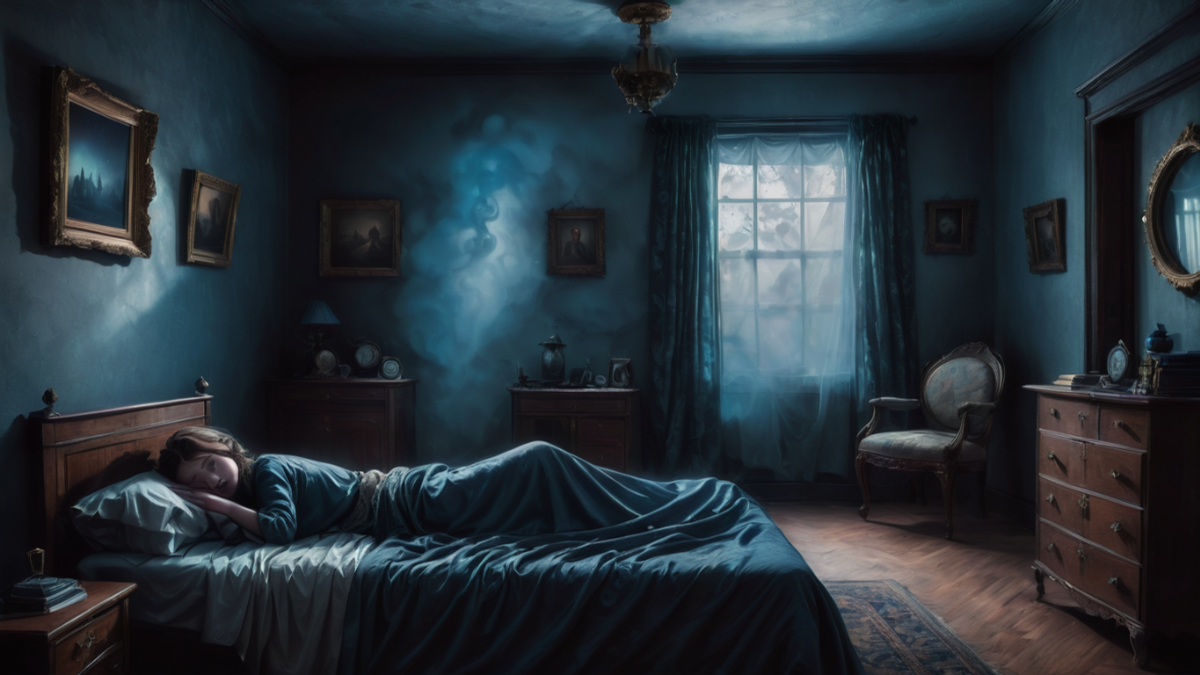
Imagine waking up in the middle of the night, completely aware of your surroundings but unable to move or speak. You feel a heavy pressure on your chest, and a shadowy figure seems to be looming nearby.
This terrifying experience is known as sleep paralysis, a condition that has puzzled scientists and fueled superstitions across cultures for centuries.
While modern science has provided insights into the causes of sleep paralysis, many people still associate it with supernatural forces.
In this article, we will delve into both the scientific explanations and the fascinating superstitions surrounding sleep paralysis.
What Is Sleep Paralysis?
Sleep paralysis occurs when you are temporarily unable to move or speak while falling asleep or waking up. It usually lasts only a few seconds to a couple of minutes but can feel much longer due to the intense fear it often induces. During an episode, the person is conscious but cannot control their muscles, as the body remains in a state of “sleep paralysis” that normally occurs during REM (Rapid Eye Movement) sleep to prevent us from acting out our dreams.
People who experience sleep paralysis often report feeling a suffocating pressure on their chest, an inability to breathe deeply, or a sense of an “evil presence” in the room. These frightening sensations have given rise to numerous myths and superstitions over the years.
The Science Behind Sleep Paralysis
From a scientific perspective, sleep paralysis is a mismatch between the brain and body during the sleep cycle. Normally, during REM sleep, the brain paralyzes most of your muscles to prevent you from acting out your dreams. However, when sleep paralysis occurs, you wake up before the REM stage is complete, leaving your body immobile while your mind is fully alert.
Several factors can increase the likelihood of experiencing sleep paralysis, including:
- Irregular sleep patterns (e.g., sleep deprivation or shift work)
- Stress and anxiety
- Sleep disorders, such as narcolepsy
- Sleeping on your back, which may trigger episodes more frequently
While sleep paralysis is relatively common—affecting an estimated 8% of people at some point in their lives—it is generally harmless. However, repeated episodes can be unsettling, and some individuals may find it difficult to shake the fear and anxiety associated with it.
Sleep Paralysis in Different Cultures: The Superstitions
Before the scientific understanding of sleep paralysis emerged, many cultures had their own explanations for the phenomenon, often attributing it to supernatural forces or malevolent entities.
- The “Old Hag” in Western Cultures: In European folklore, sleep paralysis was often referred to as the “Old Hag.” People believed that a witch or demonic entity would sit on the chest of the sleeper, causing feelings of suffocation and paralysis. The terrifying experience was thought to be an actual encounter with a supernatural being.
- “Kanashibari” in Japan: In Japanese culture, sleep paralysis is known as “kanashibari,” which translates to “bound or fastened in place.” This phenomenon is sometimes linked to spirits or ghosts, believed to paralyze the sleeper as a form of punishment or control.
- “Pisadeira” in Brazil: In Brazilian folklore, sleep paralysis is attributed to Pisadeira, a grotesque old woman who sits on the chest of her victims while they sleep, causing terror and immobilization.
- “Djinn” in Islamic Culture: In Islamic tradition, sleep paralysis is sometimes associated with Djinn, supernatural beings made from smokeless fire. Some believe that Djinn are responsible for paralyzing people during sleep and that reciting verses from the Quran can ward them off.
Despite these varied interpretations, the core experience—paralysis, a feeling of suffocation, and the sense of an ominous presence—remains remarkably similar across cultures. This suggests that the psychological and physical sensations during sleep paralysis are universal, even if the interpretations differ.
How to Manage and Prevent Sleep Paralysis
While sleep paralysis can be a frightening experience, there are ways to manage and reduce the chances of it happening. Here are a few tips:
- Maintain a Regular Sleep Schedule: Going to bed and waking up at the same time each day helps regulate your sleep cycle and can reduce the risk of sleep paralysis.
- Reduce Stress and Anxiety: Since stress and anxiety are known triggers, finding ways to relax before bed—such as meditation, deep breathing, or light stretching—can be helpful.
- Improve Sleep Hygiene: Ensure your sleep environment is comfortable and conducive to rest. Avoid caffeine or large meals before bedtime, and limit screen time at night.
- Sleep on Your Side: Sleep paralysis is more common when lying on your back, so try sleeping on your side to reduce the likelihood of an episode.
- Address Underlying Sleep Disorders: If sleep paralysis occurs frequently, it might be linked to a sleep disorder such as narcolepsy. In such cases, consulting a sleep specialist is recommended.
Science and Superstition in Sleep Paralysis
While sleep paralysis can be a frightening experience, understanding the science behind it can help demystify the condition. What was once explained through myths and superstitions is now recognized as a natural part of the sleep cycle that occasionally goes awry.
However, the rich tapestry of folklore surrounding sleep paralysis adds a fascinating cultural dimension to this strange phenomenon. Whether viewed through the lens of science or superstition, sleep paralysis continues to captivate and terrify those who experience it.