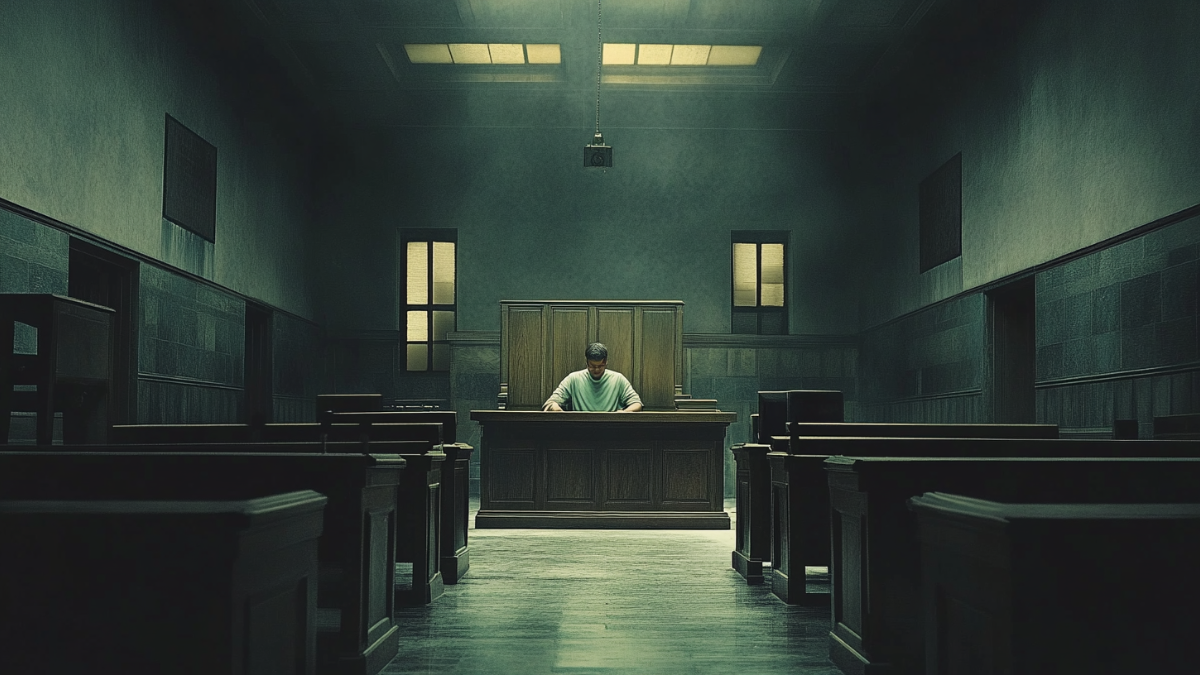
Sleepwalking is often seen as a harmless, if odd, sleep disorder where individuals perform complex behaviors while asleep, unaware of their actions. However, in some cases, sleepwalking has led to legal issues—sometimes serious ones. When crimes are committed during episodes of sleepwalking, questions arise about criminal responsibility, legal implications, and ethical considerations.
This article delves into some real-life legal cases involving sleepwalking and the ethical debates surrounding these incidents.
The Science of Sleepwalking and Criminal Responsibility
Sleepwalking, also known as somnambulism, is a type of parasomnia in which individuals engage in activities while in a state between sleep and wakefulness. These actions can range from mundane tasks, like walking or eating, to dangerous and complex behaviors, such as driving or even violent actions.
From a legal perspective, determining criminal responsibility for actions committed during sleepwalking presents a unique challenge. Sleepwalking is considered an involuntary behavior, meaning the sleepwalker is not consciously aware of their actions. This raises the question: can someone be held accountable for a crime if they were not aware they were committing it?
Famous Legal Cases Involving Sleepwalking
Several notable legal cases involving sleepwalking have made headlines, showcasing the complexity of these situations in the courtroom.
The Case of Kenneth Parks
One of the most famous cases involving sleepwalking is the 1987 Canadian case of Kenneth Parks. Parks, a 23-year-old man with no prior history of violence, drove 14 miles from his home to his in-laws’ house while asleep. During this sleepwalking episode, Parks entered their home and attacked his mother-in-law, ultimately killing her, and seriously injuring his father-in-law.
Parks claimed he had no memory of the event and that he had been sleepwalking. Medical experts testified that he had a long history of sleep disorders and was under significant stress at the time. The defense argued that Parks’ actions were involuntary, and the court ultimately acquitted him of both murder and attempted murder. The ruling was based on the fact that he was not aware of his actions at the time of the crime.
This case set a precedent for the “sleepwalking defense,” and it continues to be cited in similar legal situations.
The Case of Brian Thomas
In 2008, Brian Thomas, a British man, was charged with the murder of his wife, Christine. Thomas had a history of sleep disorders and claimed that he had been having a violent dream in which he was defending himself from intruders. Unfortunately, in reality, he had strangled his wife while sleepwalking.
Thomas was acquitted of murder after medical experts confirmed that he had been suffering from a parasomnia, and the court ruled that he had not been consciously aware of his actions. The case highlights how sleepwalking can lead to tragic outcomes, despite the absence of intent or awareness.
Legal and Ethical Considerations
Cases like those of Kenneth Parks and Brian Thomas raise significant legal and ethical questions:
- Criminal Responsibility and Intent
A fundamental principle in criminal law is that an individual must have both mens rea (a guilty mind) and actus reus (a guilty action) to be held responsible for a crime. Sleepwalking presents a unique challenge because, while the actus reus may be present (a harmful action was taken), the mens rea is absent—the person had no intent or awareness of their actions.
Courts must carefully weigh medical evidence, such as a history of sleep disorders, neurological evaluations, and expert testimony, to determine whether a defendant was truly unconscious during the event. The ethical question then becomes: can society punish someone for actions over which they had no control?
- Public Safety vs. Individual Rights
While sleepwalking defenses may absolve individuals of criminal liability, they also raise concerns about public safety. Should someone who has committed a violent act while sleepwalking be allowed to return to society without restrictions? In some cases, courts have imposed conditions such as ongoing medical treatment, counseling, or restrictions on access to certain environments (e.g., banning driving at night).
The balance between protecting the public and respecting the individual rights of the sleepwalker can be delicate. Ethical considerations extend beyond the courtroom, influencing policy decisions and public perceptions.
- The Role of Expert Testimony
In sleepwalking-related legal cases, the testimony of medical experts plays a crucial role. Experts in sleep disorders, neurology, and psychiatry help the court understand whether the defendant’s actions were truly the result of parasomnia. However, relying on expert testimony also opens the door to challenges, as defense and prosecution teams may present conflicting medical opinions.
Ethically, this reliance on experts raises concerns about fairness and accuracy in the legal process. Can courts be sure that they are receiving objective and accurate information about the nature of the defendant’s sleep disorder? This reliance on medical testimony adds a layer of complexity to already difficult cases.
Legal Precedents and the Future of Sleepwalking Defense
The sleepwalking defense remains rare, but it has been successfully used in cases involving crimes such as murder, arson, and sexual assault. The courts are often hesitant to accept the defense without substantial medical evidence, as the implications of acquitting someone for a serious crime are profound.
As scientific understanding of sleep disorders continues to advance, legal systems may need to adapt to better handle cases involving parasomnias. It’s possible that future cases will be guided by stricter criteria for presenting a sleepwalking defense, including more rigorous medical evaluations and clearer guidelines for assessing criminal responsibility in such situations.
Ethical Dilemmas
Sleepwalking cases also present ethical dilemmas. On one hand, sleepwalkers may commit actions that result in harm to others, and yet, because they were not consciously aware of their actions, they may be absolved of legal responsibility. On the other hand, should these individuals be held accountable in some way to ensure public safety?
In addition, the ethical question of punishment versus treatment comes into play. Should sleepwalkers who commit violent acts be treated as criminals, or should they receive medical treatment to address their underlying sleep disorder? The answer may depend on the severity of the crime, the risk to the public, and the likelihood of recurrence.
Navigating Sleepwalking and the Law
The intersection of sleepwalking and the law is a complex and evolving field. While sleepwalking is a recognized medical condition that can lead to involuntary actions, the legal system must carefully weigh individual cases to determine whether someone should be held accountable for their actions.
Real-life cases such as those involving Kenneth Parks and Brian Thomas highlight the challenges of balancing criminal responsibility with the reality of sleep disorders. As science continues to explore the mysteries of sleep, both the legal and medical communities will need to work together to ensure that justice is served while respecting the rights of individuals with parasomnias.